The European Health Data Space (EHDS) is an initiative in Europe aimed at facilitating access to health data across national borders and enabling their exchange. In the long term, this is intended to promote health research, improve medical care, and strengthen patients' rights. The timeline is ambitious: the EHDS was launched in March 2025 and is set to be implemented within four years.
How is the EHDS implemented in Germany?
According to the legislation, the EHDS is intended to promote the linking and collaboration of various systems while complying with standard data protection regulations. An important step is the development of a metadata catalogue that will enable the cross-border use and exchange of health data. The Federal Institute for Drugs and Medical Devices (BfArM) is setting up the central infrastructure, known as the "German Node," coordinating "Health Data Access Body" (HDAB), which will serve as the point of contact for data access. In addition, decentralised nodes, the so-called "Decentralised Health Data Access Bodies" (dHDABs), will be established. These are primarily organisations that already possess existing infrastructures and extensive expertise, and they will manage and regulate the processes. They are also expected to provide a so-called SPE ("Secure Processing Environment") to enable secure analysis of sensitive data. Within the framework of the Coordination Group for Health Research Data Infrastructure (GFDI), which was initiated by the Medical Informatics Initiative (MII) and the Network of University Medicine (NUM), and in which NFDI4Health, the Federal Ministry of Health (BMG), the Federal Institute for Drugs and Medical Devices (BfArM), the Federal Ministry of Education and Research (BMBF) and Genom.DE are involved, the roles and responsibilities for the national implementation of the EHDS are currently being discussed.
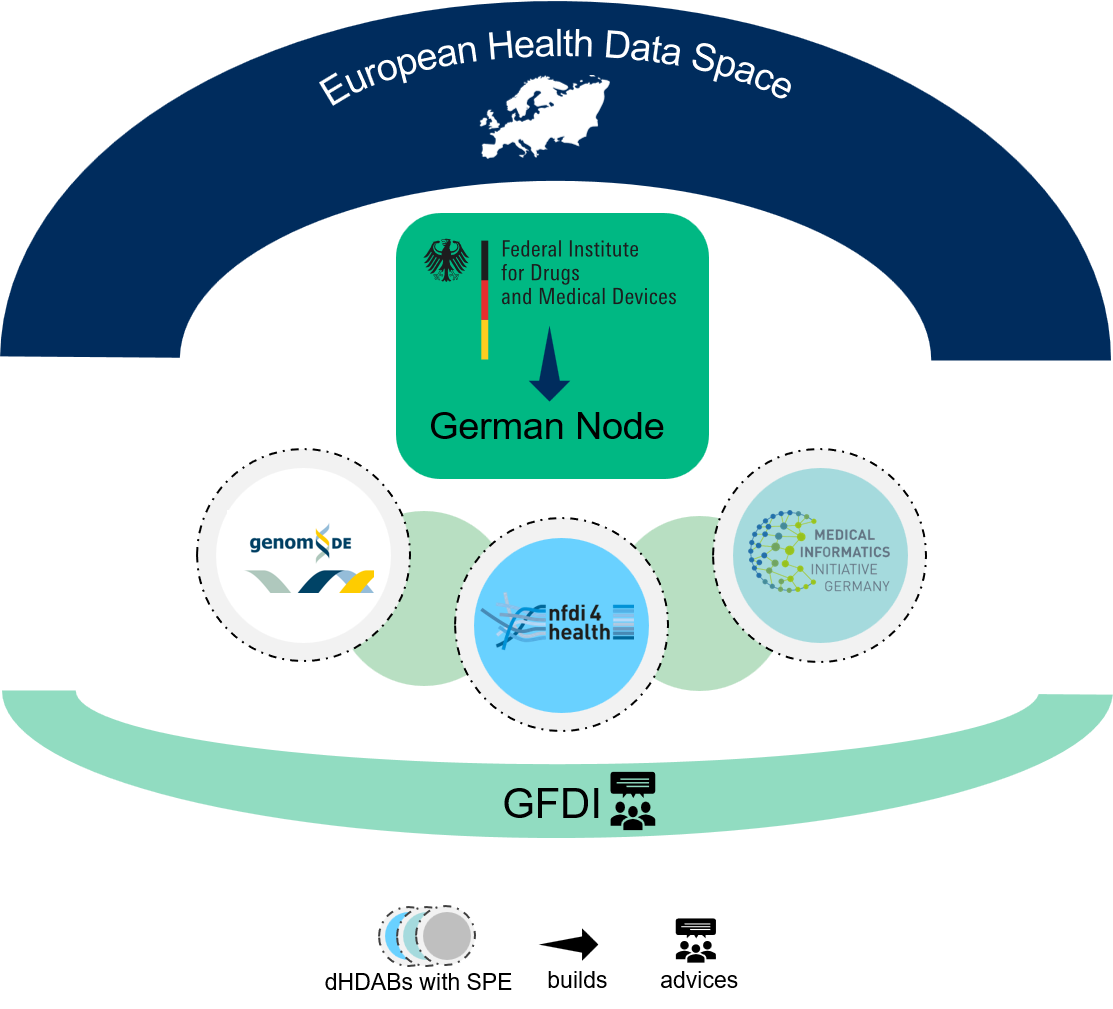
The Federal Institute for Drugs and Medical Devices (BfArM) plays the leading role in the establishment of the German Node / coordinating HDAB. As part of the EU4Health programme "Health Data Platform (HDP) for Germany" and other EU projects, it coordinates the development of this infrastructure. In doing so, the BfArM ensures that quality standards are met, the interoperability of systems is promoted, and research is supported through collaboration with national and international partners.
Genom.DE plays a central role in the development of the EHDS in Germany. Genom.de is a platform focused on the collection, analysis, and provision of health data, particularly genomic data. This platform represents an important building block within the framework of the EHDS, as it can act as an interface between German genomic medicine and the European Health Data Space.
The Coordination Group for Health Research Data Infrastructure (GFDI) brings together publicly funded German health research data infrastructures. It facilitates the exchange of developments across individual infrastructures, the joint planning of further advancements, and the creation of models for an interoperable health data landscape within the framework of the EHDS. As part of the National Research Data Infrastructure (NFDI), NFDI4Health represents the NFDI within the GFDI and acts as a mediator between the needs and solutions of the infrastructures.
Since 2020, NFDI4Health has been working within the framework of the NFDI to develop standards and infrastructures that ensure the secure and efficient exchange of health data. The NFDI connects research institutions and strengthens research by acting as a cross-domain German contribution to European data spaces and the European Open Science Cloud (EOSC). To improve the discoverability of health data, NFDI4Health has introduced a data publication workflow that can serve as a model for the EHDS:
NFDI4Health has developed a metadata schema for health data, which can evolve into the German metadata catalogue and, in the long term, into an international standard.
With the Health Study Hub search portal, NFDI4Health makes health data centrally discoverable. The data come from epidemiological, clinical, and public health studies, as well as registry data and administrative health data.
NFDI4Health integrates local metadata registries by providing Local Data Hubs or supporting the development of appropriate interfaces. These can serve as templates for other central search portals or be directly connected to the central search portal.
Additionally, NFDI4Health works closely with the Medical Informatics Initiative (MII) to expand the Research Data Portal for Health (FDPG). In the area of data linkage, NFDI4Health contributes its expertise in close collaboration with MII and NUM and provides advice on data types, harmonisation, and interoperability.
The Medical Informatics Initiative (MII) is a nationwide data infrastructure in Germany that develops interoperable systems to bring together and analyse healthcare data from various sources. Many partners of NFDI4Health are also partners in the MII, ensuring that the standards and services of NFDI4Health are compatible with the standards developed within the MII. Together with the MII, NFDI4Health is further developing the Research Data Portal for Health (FDGP) into a general application portal. The portal already offers a platform to search for healthcare data, make feasibility inquiries, request data, and ensure transparency in these processes. In combination with the NFDI4Health Health Study Hub, both infrastructures can provide significant components for the development of HDABs.
The Network of University Medicine (NUM) was launched at the beginning of the COVID-19 pandemic and has since strengthened collaboration between university hospitals in Germany. NFDI4Health promotes the FAIR publication of NUM health studies in the Health Study Hub, such as the collaborative project coverCHILD, and will actively contribute to the design of the planned national study platform for clinical data from NUM. The goal is to support NUM in developing standards for the FAIR publication of study data and to establish common criteria that can be integrated into the EHDS.
Latest news on NFDI4Health and EHDS
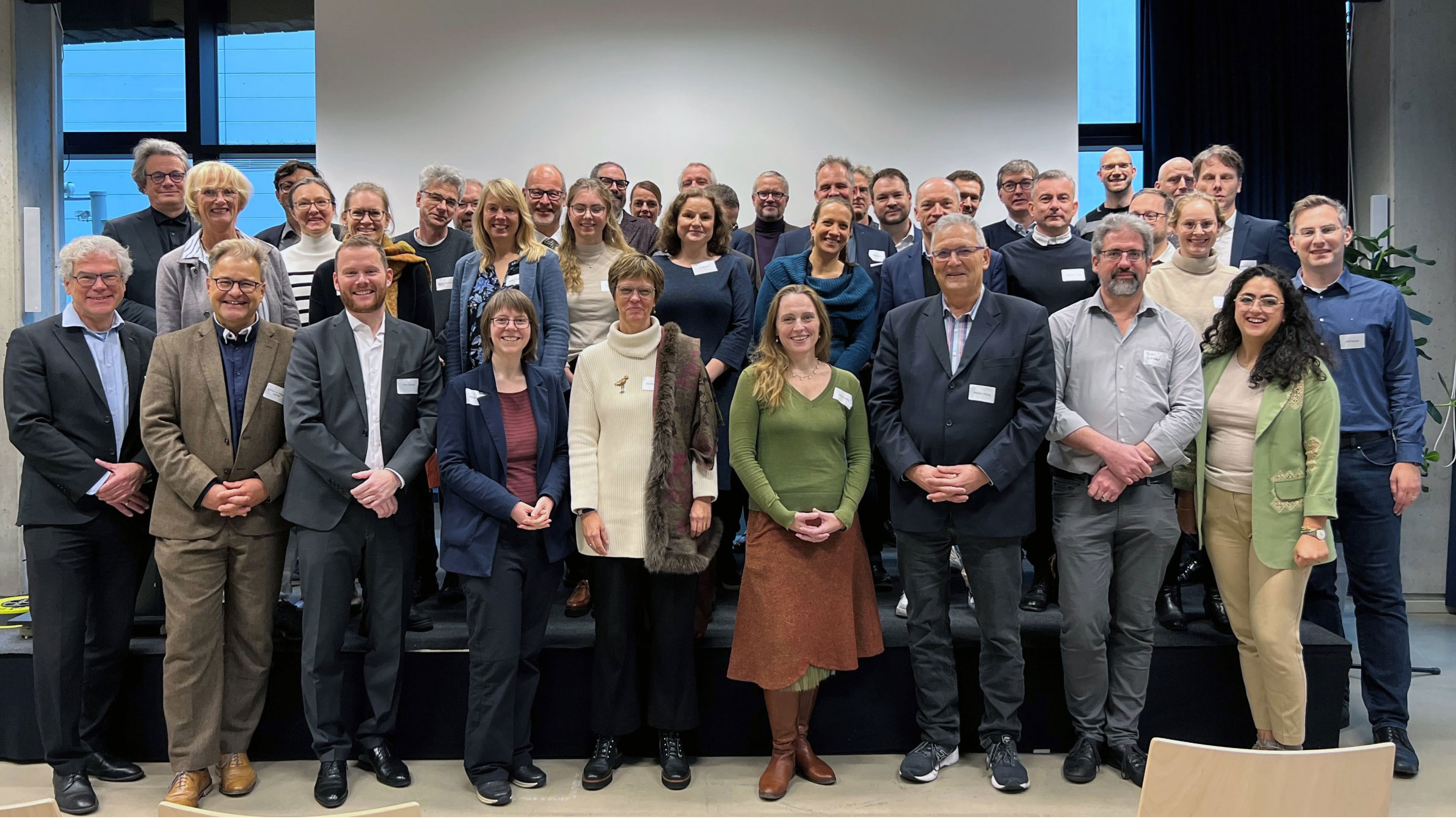
NFDI4Health beim Workshop zum Europäischen Gesundheitsdatenraum
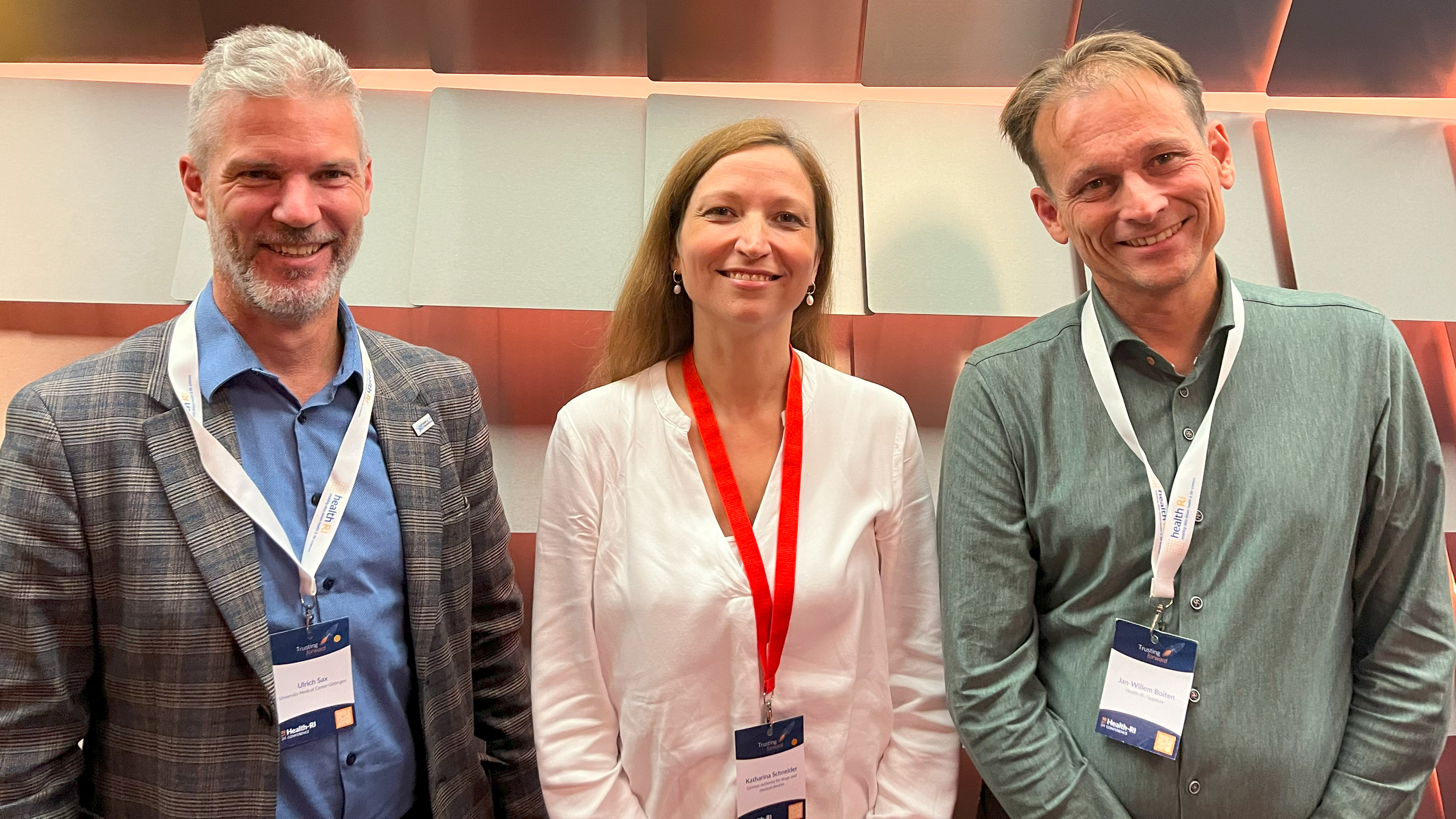
NFDI4Health at the Health-RI Conference in Utrecht